Interview with Pascal Diethelm, an expert and campaigner against the power of the tobacco industry
An industry that knows and uses its harmful potential
De Pascal Diethelm et
Martina Staenke
“The relief I get from the first puff is immediate, stunningly violent. Nicotine is a perfect drug, a simple and hard drug, which brings no joy, which is defined entirely by lack, and by the cessation of lack.”
Michel Houellebecq, Sérotonine (translation by Pascal Diethelm, 2020)
This quote illustrates one of the tobacco industry’s recipes for success: it serves to satisfy a need that it has itself created. The immense profits of the tobacco companies are based on a product with an extremely addictive potential, which kills every second consumer. Although the problem that the tobacco industry presents for public health has been known for decades, its influence has scarcely been broken. And although governments have identified tobacco industry interference as a chief obstacle to their efforts to implement tobacco control measures, many have become vulnerable to the industry’s tactics. Even the fact that 181 nations so far have ratified the World Health Organization’s Framework Convention on Tobacco Control (WHO FCTC) has not eliminated the problem and, especially in low and middle-income countries, the influence of tobacco companies continues to be viewed with concern.
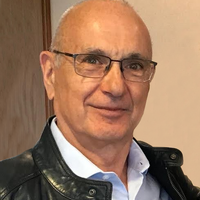
Today Pascal Diethelm, who has been tackling the power of the tobacco industry for years, is with us for an interview.
Martina Staenke:Mr
Diethelm, thank you very much for agreeing to take part in this
interview. I know you’ve been a real fighter for tobacco control for
many years both at the national and international level. In WikiLeaks,
you are listed as a tobacco whistle-blower due to your great successes
in revealing the lies of the tobacco industry. I guess you have caused
them a lot of trouble! It is a great pleasure to talk to you today.
Pascal Diethelm: Thank you for inviting me. First of all, I want to congratulate you on your own commitment. This is crucial. International health authorities and the World Health Organization need the support of civil society. In the beginning, when we started to negotiate the WHO Framework Convention on Tobacco Control (WHO FCTC), we worked with a civil society organisation called the Framework Convention Alliance (FCA) comprising of some 500 NGOs. Together, we were able to bring real substance to the treaty. Without this civil society contribution, the treaty would have been a blank piece of paper: something that was politically correct and nice to read, but ineffective. This fact is even recognised in the treaty itself: one of its articles states that the contribution of civil society is essential.
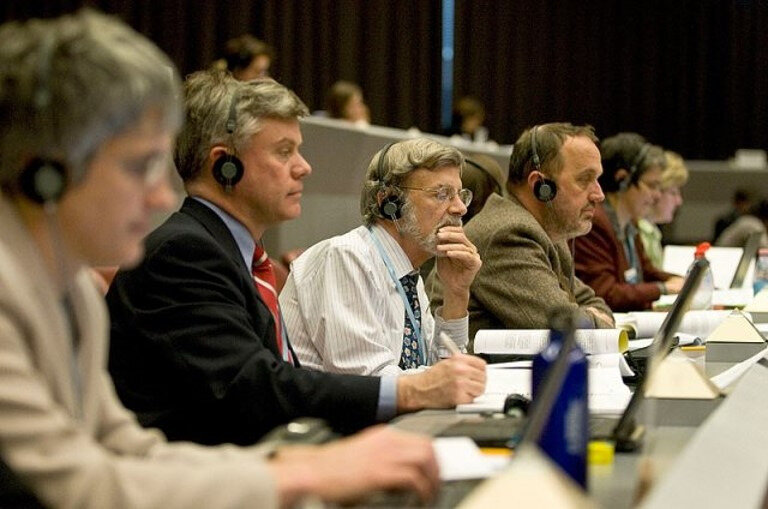
Civil society observers from FCA participating in the negotiation session of the FCTC in Geneva. (public)
Martina Staenke: What
is the current situation regarding tobacco use in low and middle-income
countries (LMICs)? How is the tobacco industry operating there?
Pascal Diethelm: Well, there’s no easy answer to that question because the tobacco industry takes each market and country individually and then exploits it to the utmost, taking advantage of all the weaknesses in the political system and authorities. Let’s take the example of Indonesia. This is one of the few countries which has not ratified the Framework Convention on Tobacco Control (FCTC). There is an incredible situation in the country with tobacco advertising absolutely everywhere.
And it’s not just teenagers who are being targeted by the tobacco industry: their products are even being advertised to kids from the earliest age and the whole country is sick from tobacco. Indonesia is probably the ideal market for the tobacco industry because they can sell their products without any constraints there and have the largest number of people addicted to tobacco from the earliest age.
Of course, the Framework Convention on Tobacco Control (FCTC) has been developed to avoid such situations. And the FCTC has had successes: in rich countries, for example, the general trend is towards strict regulation and the prevalence of smoking and tobacco use is decreasing – not extremely fast, but at least at a steady pace. However, this means the tobacco industry is being forced to find new markets. In LMICs, which are vulnerable to interference from the tobacco industry, the FCTC is in most cases the only instrument at a government’s disposal to pass legislation protecting their policies from this interference.
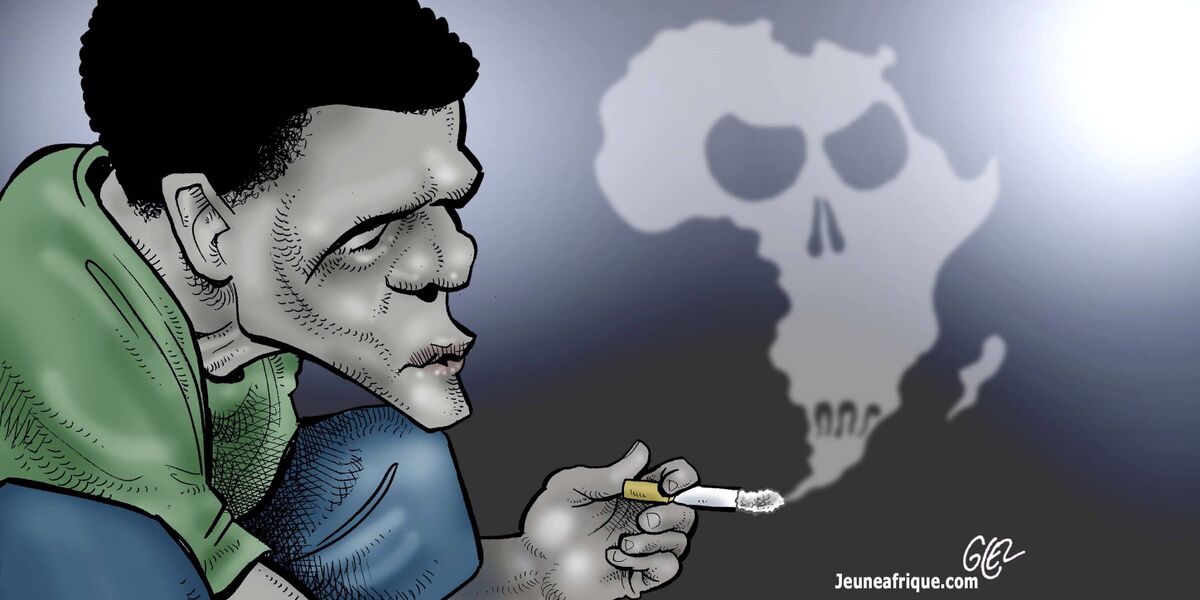
Africa, a market to conquer
Martina Staenke:How can the tobacco industry succeed in finding new markets, given that it is common knowledge that smoking is harmful to health?
Pascal Diethelm: Low and middle-income countries have a number of characteristics which make them extremely attractive for the tobacco industry, and this means they represent huge potential markets for the future.
First of all, the industry wants to attract more women. So far, it is mainly men who smoke in LMICs. But this is set to change as the tobacco industry recognises women as a new target group. This means that there is a whole market which is ready to be developed and taken advantage of, and the tobacco companies know how to do it. We have already had a good example of this: in the 1990s, when the former Soviet Bloc collapsed and all these Eastern European countries opened up to Westernisation, the tobacco companies rushed in and presented cigarette smoking as the symbol of Westernisation and they particularly addressed women. A few years later, in these countries which previously had a very low rate of smoking among women, the number of women who smoked caught up with the prevalence of smoking among men.
Young woman of African descent taking a cigarette break. Photo: istock
The second point is that if you take, for example, the African
continent, you have a huge reservoir of potential smokers because its
general population is overwhelmingly young. If you look at the age
pyramid, it is really bottom heavy in Africa. The vast majority of the
population is in the younger age groups, and we know that the smoking
habit is something that has to start early. People do not generally
start smoking after 25 – very few people do – so you need to catch them
while they are still young. And in almost all African countries, you
have a huge reservoir of young people. It makes the tobacco executives
salivate to see this population of young people that could be future
tobacco users.
Another point to consider is that the industry knows their
product is addictive, and they know that once a person is addicted, he
or she will do anything to get the product. A smoker needs their daily
supply of nicotine to live a normal life, which means that these people
are fairly insensitive to price increases. In LMICs, the price of
cigarettes is still quite low, and therefore there’s a huge potential
for the industry to raise the price.
And finally, these countries also have a high potential for
economic growth and this means generating growing revenues. The tobacco
industry is keen to get their share of the revenues that will be
generated by future growth in these countries. They want to grab a share
of the income that is available to the people, to the households in the
countries.
Another point to consider is that the industry knows their product is addictive, and they know that once a person is addicted, he or she will do anything to get the product.
The power and intrigues of the tobacco industry…
Martina Staenke: Why are LMIC governments not interested in combatting these methods used by the tobacco industry?
Pascal Diethelm: Governments are sometimes helpless in the face of the power of the tobacco industry. The turnover of Phillip Morris, for example, means the company has a power comparable to that of a rich country. Because of this power, the company will not hesitate to defend its interests. And when you have companies like this with huge, deep pockets, they have a capacity to corrupt and seduce, which is very hard to resist.
They also use techniques which are quite dubious. I was in an African country and I had a chat with a member of the governing department. He told me that one tobacco multinational operating in the country hired a sex-worker and presented her to him as an executive of the local branch of the company. This lady tried to seduce him. She was calling him in the daytime and even during the night, driving his marriage close to breaking point.
This is just one example of how these companies tick. I have heard many similar examples in my discussions with officials in the ministries of health in Francophone African countries. Tobacco industry representatives keep a low profile and operate underground. They use tactics ranging from seduction to assertiveness and arrogance, all in the name of trying to intimidate officials with the power they derive from the easy commercial success of their companies.
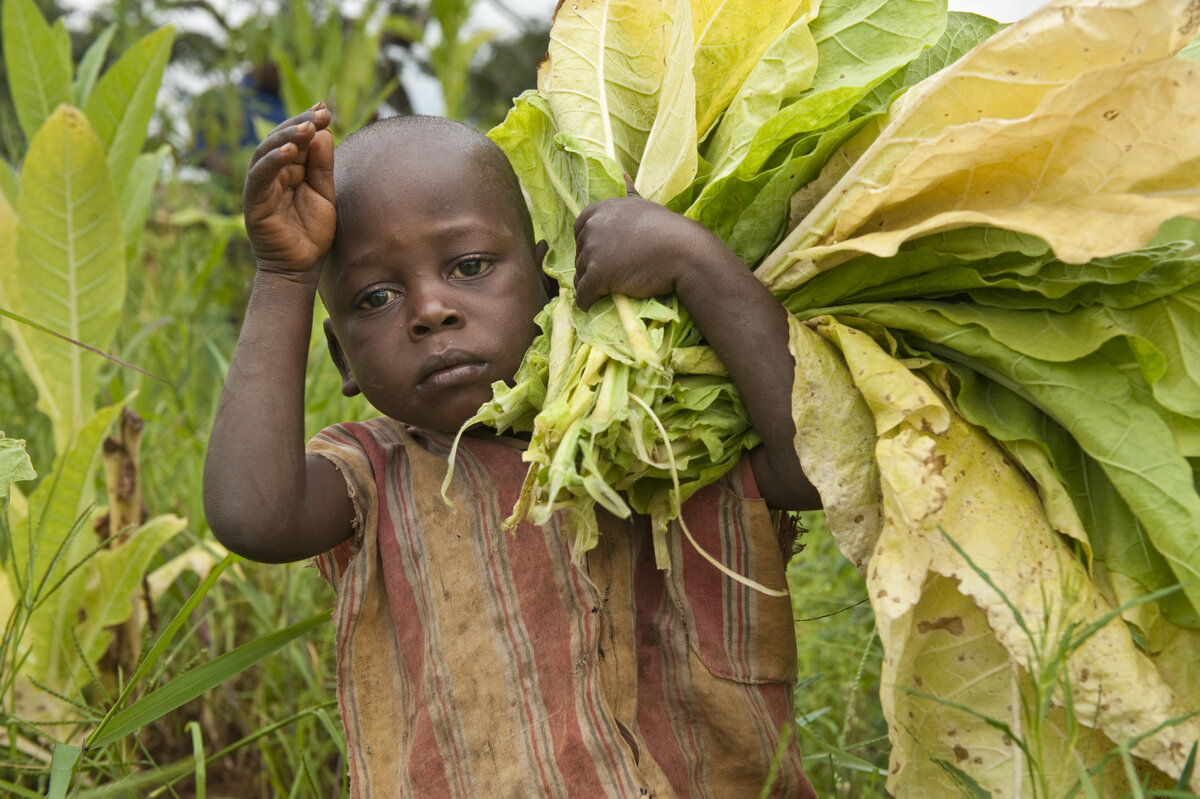
They also try to polish up their image by concealing the facts, as in
the case of the ECLT Foundation (Eliminating Child Labour in Tobacco-growing Foundation), which promotes itself with a nice website
against child labour in LMICs.
In truth, the ECLT Foundation is nothing
more than a public relations instrument for the tobacco industry. It
isn’t even a front for the industry: it is
the industry! The ECLT’s members are exclusively tobacco companies. With
this foundation, they want to show that they are acting against child
labour, but it is all a way of hiding the truth. The real issue is that
child labour exists because of the way the tobacco companies negotiate
with the farmers and the conditions they impose on the tobacco growers –
basically trapping them in poverty – so that the growers have no other
choice if they simply want to survive, given the conditions imposed upon
them by the tobacco companies, than to employ their children who
provide free labour.
This is the only way for the farmers to
survive. The tobacco industry has no real desire to change the actual
cause of child labour.
The real issue is that child labour exists because of the way the tobacco companies negotiate with the farmers and the conditions they impose on the tobacco growers – basically trapping them in poverty – so that the growers have no other choice if they simply want to survive...
… and the vulnerability of some countries
Martina Staenke:Do international NGOs have any chance of improving the situation?
Pascal Diethelm:Yes,
they can improve the situation, and they are already contributing
crucially to the process. There is a great deal of collaboration among
global networks under the leadership of the Framework Convention
Alliance (FCA).
The FCA played a critical role in the drafting of the FCTC and
continues to be very active at each Conference of the Parties to the
treaty and in intersessional work. This work is largely being done by
civil society with meagre – but precious – voluntary funding.
While
the international consensus required to adopt the FCTC is a remarkable
achievement, and while the rapid ratification of the treaty by 181
countries plus the European Union is impressive, it must be said that
the implementation is slow: 20 years after being drawn-up, the treaty’s
objectives are still far from being achieved. On the positive side, the
treaty remains dynamic, and progress is being made each year. However,
the international efforts undertaken by governments are often
disappointing in the face of a serious public health problem that many
of them have helped to create and propagate – starting with the USA,
which is not even a Party to the FCTC.
The Framework Convention Alliance (FCA) played a critical role in the drafting of the FCTC and continues to be very active at each Conference of the Parties to the treaty and in intersessional work.
To take another example: France had the monopoly of tobacco distribution in French-speaking Western Africa. In 2000, the state sold this monopoly to a multinational tobacco company. Since its acquisition, this multinational has continued to act in the same way as its governmental predecessor, granting itself access to West African ministries and discussing and negotiating with officials there at will. This was and still is in complete contradiction to the principles of the tobacco framework convention, which prohibits this kind of interaction between the tobacco industry and government officials.
...it must be said that the implementation is slow: 20 years after being drawn-up, the treaty’s objectives are still far from being achieved.
France is largely responsible for the expansion of the tobacco
problem in Francophone Africa. To date, however, France is doing nothing
about it. The country has washed its hands of the problem. If France
were to acknowledge its responsibility, it could help to improve the
situation through a policy of collaboration with governments in
Francophone Africa, helping them to put in place effective tobacco
control measures – such as comprehensive bans on advertising, plain
packaging for tobacco products and increases in tobacco taxation to
levels that would truly dissuade young people from taking up smoking.
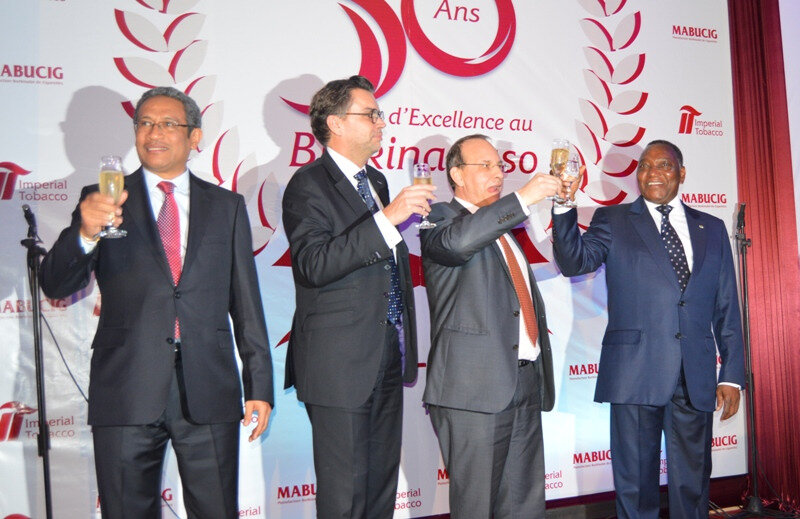
A picture showing Imperial Tobacco celebrating the 50th anniversary of Mabucig, its subsidiary in Burkina Faso.
The tobacco multinationals act as a worldwide oligopoly. The
international community, in the form of the WHO Executive Board,
recognised the tobacco epidemic as a pandemic as early as 1985. Faced
with such a global challenge, countries have understood that the
response must be multilateral and at a global level, hence the FCTC.
However, such a treaty becomes effective only if its stipulations are
transposed into national and regional law … and then applied! The
tobacco industry has been able to considerably impede the implementation
of the FCTC. Countries, notably LMICs, need to support each other and
to act collectively to defeat such moves by the tobacco industry. This
requires creativity, flexibility and cooperation. In pursuing this
collective effort around the FCTC to fight the tobacco pandemic,
countries are in the process of setting up a framework of international
cooperation that could also become a model to tackle other major global
issues in health and other areas.
Countries, notably LMICs, need to support each other and to act collectively to defeat such moves by the tobacco industry. This requires creativity, flexibility and cooperation.
What is wrong with Switzerland?
Martina Staenke: The
Global Tobacco Industry Interference Index (2021) was recently
released. It shows that Switzerland is also doing quite badly: the
country is ranked in 79th place out of a total of 80 countries. What are your thoughts about this? Is Switzerland neglecting its responsibilities?
Pascal Diethelm: Well, this is really shocking. It is something that should be the subject of grave concern, because clearly, who is governing Switzerland here? It’s not the people, it’s the tobacco multinationals! And the Swiss government has actually given preference to the specific narrow interests of the tobacco multinationals over the protection of its population’s health. This is not acceptable: it’s a violation of the Human Rights Convention.
Martina Staenke:Though perhaps we should not really be too surprised at Switzerland’s
poor performance: only recently, the Federal Council rejected an
initiative called “Yes to the protection of children and young people
from tobacco advertising” which aimed to protect young people from the
serious health damage caused by tobacco consumption. Again, we have to
ask ourselves: is Switzerland completely neglecting its
responsibilities?
Pascal Diethelm: You can quote me on this. I say this is “criminal” because when I
read the message from the Federal Council to Parliament, they said very
clearly that this initiative was a good thing. It is everything we need
from a public health perspective. Tobacco use is responsible for 15% of
deaths in Switzerland, which exceeds the deaths caused by Covid-19. The
Federal Council judged that the measures proposed in the initiative
would be effective to solve the problem. And then, having said all that,
the Federal Council still comes out against the initiative because it
might be detrimental to the interests of the tobacco industry. It stated
that it would not take any measure to protect public health against
smoking that is not approved by the tobacco multinationals in
Switzerland. This is totally irresponsible.
You know,
Switzerland was founded on the idea of being independent from the
influence that external powers wanted to have over the country. And now
you can see that our political decision makers at the top are the
servants of the tobacco multinationals. They serve an industry which has
tons of money and, at the same time, contributes to the worldwide
increase in inequality. These tobacco executives operate from Geneva and
Lausanne, in their very luxurious offices overlooking Lake Geneva and
the Alps and appreciating the pure air. And from there they are working
to trap people in Africa into tobacco use and nicotine addiction.
I
worked in Chad, for example, where the average household income is
about two Swiss francs per day. You cannot imagine what a disaster it is
for such a family when the man or woman smokes because more than half
the family income literally goes up in smoke to the detriment of
education, health and the family’s food supply. Smoking comes first and
all the fundamental basic needs of the family are neglected. This is a
tragedy.
The Federal Council stated that it would not take any measure to protect public health against smoking that is not approved by the tobacco multinationals in Switzerland. This is totally irresponsible.
Martina Staenke:Tobacco
is one, if not the main cause of non-communicable diseases (NCDs): to
what extent are NGOs in global health considering the issue of tobacco
prevention? Should they focus more on prevention rather than addressing
NCDs?
Pascal Diethelm: The global WHO programme to address NCDs is based on the fundamental observation that these diseases are mostly preventable. The best approach to prevent NCDs is basically associated with four groups of risk factors: tobacco use, physical inactivity, harmful use of alcohol and unhealthy diet. The most severe of these is tobacco use.
If you tackle these four risk factors, you decrease the prevalence of NCDs by a very large factor. And this is very cost effective because prevention is the cheapest measure to implement. Yet there is one thing from a human perspective that should be considered, and you are an anthropologist, so you know this: we feel proud when we achieve something. If somebody is sick and then we treat this person and they become well, we feel a sense of achievement. When we prevent somebody from being sick, the person continues to be healthy and we see no difference – therefore it’s difficult to count this as an achievement. This is probably the main obstacle towards prevention – especially for political decision makers. The effect of prevention has no observable effect!
Another significant barrier against prevention is the aggressive methods used by tobacco advertising. We all know that tobacco use makes people addicted and drastically accelerates ageing. But throughout the 20th century, the tobacco industry was able to associate tobacco smoking in our subconscious with youth, freedom and emancipation. All these associations and ideas are burnt into our collective subconscious and are connected to cigarettes and smoking. This is the result of 50 years of advertising and of creating this social image of smoking. We are now in the fight to deconstruct it, but it takes time.
Thank you for the interview!
References
Assunta, Mary. 2021. Global Tobacco Industry Interference Index 2021.
Global Center for Good Governance in Tobacco Control (GGTC). Bangkok,
Thailand. Nov 2021. https://exposetobacco.org/wp-content/uploads/Globa...
Pascal Diethelm spent most of his professional career working at the World Health Organization in biomedical computing and as the head of information technology, notably supporting the organisation’s Tobacco Free Initiative. Since his retirement, he has taken an active role in tobacco control, both at a national and international level.
In 2001, he revealed along with Dr Jean-Charles Rielle that a renowned professor who led the department of environmental health at the University of Geneva had been secretly working for Philip Morris for 30 years and had conducted fraudulent studies denying the toxicity of second-hand smoke. This revelation was confirmed by the Swiss courts after a long trial in a now famous libel case known as the “Rylander affair”. WikiLeaks and Wikipedia list Pascal Diethelm as a tobacco whistle-blower.
Pascal Diethelm is also considered an expert in the analysis of internal tobacco industry documents, for which he was awarded the International Tobacco Industry Documents Award by the University of California, San Francisco.
He is president of OxySwitzerland, a Swiss tobacco control NGO; vice-president of the Comité National Contre le Tabagisme, a French tobacco control NGO; deputy secretary-general of the French Alliance against Tobacco; and board member of CIPRET Genève, the Geneva Centre for Information on Smoking Prevention. He is a founding member of the Framework Convention Alliance (FCA). In 2013, he was a recipient of WHO’s WNTD Award.
In January 2016, he was named Reviewer of the year by Tobacco Control, a journal published by the BMJ Group. In an article dedicated to him, The Lancet described Pascal Diethelm as a “tireless opponent of the tobacco industry.”
Martina Staenke, Communication Manager, Medicus Mundi Switzerland. Email